Skip to main content
Read an excerpt of the Final Fantasy composer’s intimate biography.
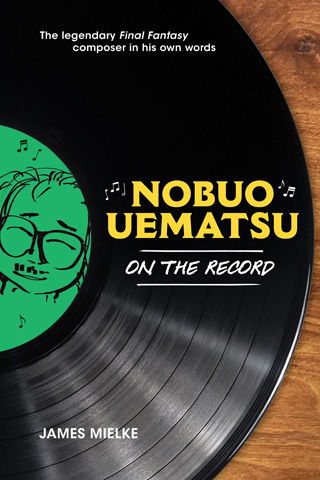
Nobuo Uematsu: On the Record written by James Mielke
One of the most celebrated and prolific composers in video game history, Nobuo Uematsu, at last goes on the record in this intimate, honest, and joyful account of his life and career.
The original composer of the phenomenally successful Final Fantasy games, Nobuo Uematsu’s work is known by millions and has been performed by some of the most prestigious orchestras around the world. Drawn from hours of conversations with Uematsu, as well as his wife, his peers, and industry titans, veteran gaming journalist James Mielke explores the life, inspirations, and influences of the beloved musician, from his childhood and first forays into music to his time at Square Enix and the global success of his concert tours.
Enjoy this exclusive excerpt Nobuo Uematsu: On the Record, written by James Mielke:
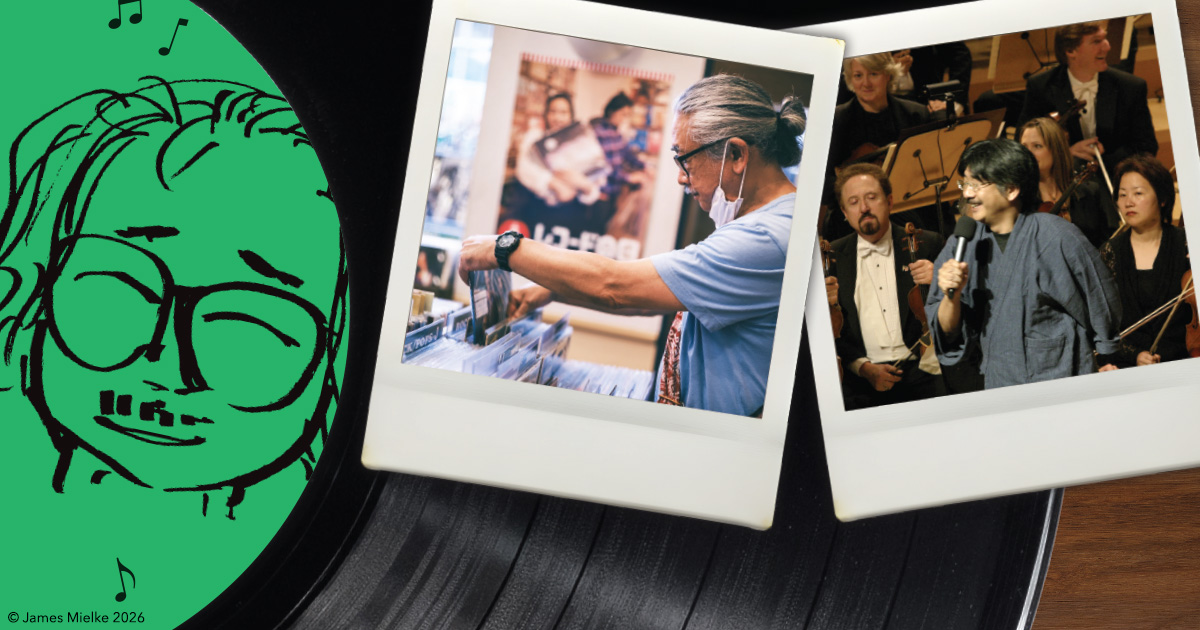
It’s a chilly winter afternoon on January 16, 2025, as we arrive at Nobuo Uematsu’s Dog Ear Records studio in Denenchofu, Tokyo. Uematsu, best known as the longtime composer of the Final Fantasy game series’ soundtracks, has been touring a lot lately. Not quite a forty-date Foo Fighters trek across North America, but still ambitious for a man in his sixties who is generally more comfortable in the studio than he is on the stage. Following a few Australian tour dates in early September 2024 (which sold out in minutes, according to Dog Ear Records cofounder and co-CEO Hiroki Ogawa), Uematsu later brought his band, conTIKI, to Sandefjord, Norway, for a special performance at the Retromessa retro game fair.
For this meeting, one of his conTIKI band members, Rie Tozuka, is sitting in and observing the process. Tozuka is a veteran voice actor, having provided voice-overs for a variety of video games (SEGA’s Yakuza and Valkyria Chronicles series, Atlus’ Persona 5 Royal, Mistwalker’s Fantasian, and Konami’s LovePlus series) as well as assorted roles in anime shows like Saint Seiya. conTIKI’s albums are the collaborative result of Uematsu’s vision, combining music, visuals, and storytelling, with Tozuka providing narration in accompaniment with the projected visuals during live performances.
As is his tendency, Uematsu is dressed comfortably. While not as fashion-conscious as his longtime collaborator and friend Hironobu Sakaguchi, who is always sporting brand-name gear, Uematsu’s fashion style—usually comprised of comfortable linens and natural colors—is pleasantly at odds with the attire of typical Japanese salarymen, who—regardless of the seasonal conditions—are known for their traditional black or blue suits. In regions like Tokyo or Osaka, they’re typically seen in the hundreds on every city street. Not Uematsu.
This lack of formality extends to his music as well. Uematsu is a self-taught pianist, just like composers Nikolai Rimsky-Korsakov, Edward Elgar, Elton John, Tori Amos, and Scott Joplin. Perhaps it’s the result of his music arriving at the dawn of a new entertainment medium—video games—but whatever the reason, few musicians have consistently shown an ability to stir emotions and move people in the moment the way Uematsu has done for decades now, in so many games.
Having stepped back from full-time soundtrack composition with the conclusion of the Fantasian score in 2021, Uematsu’s main creative outlet these days is conTIKI. He remains active, composing the occasional track for the occasional game (more often than not for longtime collaborator Hironobu Sakaguchi’s games developed by Mistwalker), keeping tabs on the touring concert series Distant Worlds, and producing albums under the conTIKI moniker. Uematsu may have relieved himself of the demands of composing game soundtracks, but he is hardly retired. While he has no regrets about his work on Final Fantasy and the other games which made him internationally known, he has unfulfilled ambitions that he’s carving out the time for now. Ambition is practically Uematsu’s middle name, though, and this ambition started young.
“I knew I wanted to do something with my life. When I was little, I was full of curiosity. There was so much wonder in the world. I just wanted to do this or that, in this wonderful world with all these possibilities. As you get older, in middle school and high school, you start to think about what to do with your life. By then, I knew I wanted to do music. But it’s broad and ambitious. There wasn’t a real career path to [making] video game music. I never thought that was something I wanted to do.
“Then, as fate would have it, I started working for Square. That was like a tornado of events that lifted me up to where I am now. I started off on the ground. But it’s taken me up into the upper echelons of the sky. Objectively, people might think of me as someone who has a lot of confidence. They might be jealous of my fame or where I am [in life]. But at this age, I still feel like I lack confidence. I’m very nervous about where I am. I don’t know which direction to go. I didn’t get up here by my own accord. It was this tornado that lifted me up.”
For someone who lacks confidence, his output is only rivaled by the late Koichi Sugiyama’s work on the Dragon Quest series. While luck may have played a part in the opportunities that manifested, as the great Freddie Mercury once said, “Talent will out, my dears.” And talent it was that kept Uematsu doing what he did so well.
To know the composer, you must first know about “Nobu-kun,” the boy who would later become the man known by millions of fans around the world. “There are a lot of things that I haven’t talked about from my childhood,” he says, providing the perfect opportunity to go back to the beginning.
Dive deeper into the life of the legendary composer with Nobuo Uematsu: On the Record, available here.

You’ll never miss a beat when you subscribe to our newsletter.
Already have a VIZ account? Log in.
Don't have an account? Sign up.
Enter the e-mail address associated with your account and we'll email you a link to reset your password.