Skip to main content
Your source for in-depth interviews, manga spotlights, and expert advice for your life as a mangaka.

We’re officially one month into 2026! Have you set any goals for the year? Are there any artistic mountains you’d like to climb, any creative pursuits you’d like to chase? We place a lot of emphasis on the beginning of the year as an opportunity to make changes, both large and small, to better our lives. Was there something that frustrated you in 2025? 2026 is your chance to address it and to find a way to move past it. Was there something about your work that thrilled you last year? 2026 is your chance to lean into the skid and see where your work takes you.
As we ease into the new year, we open with a bit of perspective from VIZ Originals One-shots editor Hisashi SASAKI, and close with a bit of advice from Kazuhiko Torishima’s Dr. Mashirito’s Ultimate Manga Techniques. Here’s to finding our footing in 2026!
CONTENTS:
Mangakas Can Bring Joy to Their Audience
On Parsing Critique (and Where to Find It)
Dr. Mashirito’s Ultimate Manga Techniques: The “Protagonist > Story” Formula
VIZ Originals One-Shots
Coming Soon from VIZ Originals

Congratulations on completing another year of the VIZ Originals one-shots program! How many different one-shots did you publish last year?
Hisashi SASAKI: We have published 16 one-shots in 2025. Since the inception of the program, we have published 31 by 22 different mangakas so far.
You’ve worked with a variety of mangaka over the course of the program, from established working mangaka to fresh recruits. Have you worked with anyone who submitted their first manga ever to the program?
SASAKI: Yes, some of the mangakas submitted their very first work to our program. I am very honored that they chose our program as their destination and I hope their experience with us has been positive.
We spoke at length about the need for mangakas to tell stories that they want to tell. Over the past year, have there been any works or mangakas that genuinely surprised you?
SASAKI: Yes, I’m delighted to discover that numerous mangakas have their own stories to share through manga. I firmly believe that mangakas can bring joy to their audience only by sharing the stories they themselves genuinely enjoy creating. I’ve come across many mangakas who submit their precious works to us, and I’m thrilled to find that they all share the same values.
Are there any goals or dreams you’d like to share for the program in 2026?
SASAKI: Our goal for 2026 is to publish more one-shots than we did in 2025 and launch one or two serializations. And I believe those are realistic goals.
Looking to the future, do you have any words of encouragement for mangakas submitting to the program in 2026?
SASAKI: This marks our third year since the program’s inception, and we are proud to have consistently published a diverse range of one-shots by mangakas from across the globe. We aspire to expand the program’s scope even further and strive to make it a destination worth considering for aspiring mangakas worldwide.
Speaking of expanding our scope, our one-shots began appearing on the global store and app BOOK☆WALKER last year, to go alongside our own VIZ Manga app. This puts our one-shots right alongside the best and brightest from every publisher in the industry. What appeals to you about this kind of expansion?
SASAKI: I feel very optimistic about it. We are actively seeking partnerships with other platforms beyond BW to maximize the exposure of our one-shots.
Similarly, how is digital manga consumed in Japan? Can readers access series across multiple preferred platforms of their choice, or is digital manga usually only available through publisher-run platforms?
SASAKI: I can’t really speak for the current state of digital publishing in Japan because I’ve been out of the loop for a while now. However, I believe that both publishers and mangakas are using digital platforms to distribute mangas much more than we do in the U.S.
Finally, do you think a sense of competition can be a healthy motivator for mangaka, to push them to reach a new level in their creativity or abilities? Or are there other forms of motivation you value more highly than a competitive spirit?
SASAKI: Absolutely, yes. I have witnessed firsthand how healthy and fair competition can motivate and elevate many mangakas. I believe it is safe to say that the more talented a mangaka is, the more competitive they tend to be ( just like in sports!). After all, all mangakas create manga to have their audience read them. It is natural for them to want their mangas to be read by as many people as possible, which naturally leads them to want to be the most popular mangaka.
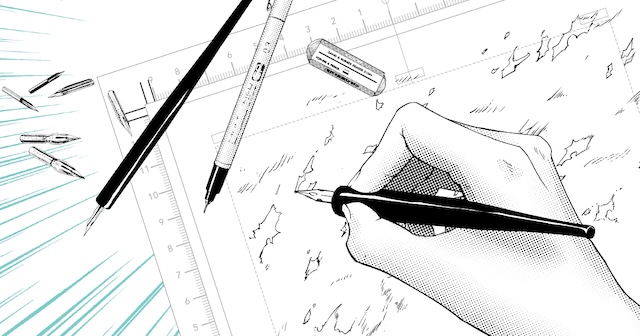
When working with Shonen Jump in Japan, post-publication reader surveys play a huge role in the editorial process. Essentially, once a manga has been published, readers are given an opportunity to send fan mail and feedback to the publisher, who then sifts, sorts, and processes those notes in a way that will hopefully be helpful to a mangaka. Sometimes a side character becomes surprisingly popular with fans, which gives the mangaka a chance to increase the appeal of their work by including that character more often. Sometimes the feedback is about story developments, or artwork, or the overall feel of a manga.
Ultimately, these surveys are meant to help the mangaka figure out what’s resonating most with their audience. For one-shots, they function as a kind of post-mortem, a way to gauge how receptive audiences are of the story, in addition to finer points like how specific slices of that audience appreciated different things, or even how certain characters fared. For ongoing series, they offer a chance to identify areas for growth and future storytelling. It’s less about getting ideas from surveys and more about using them as a way to examine your own work from angles that may not have occurred to you organically.
Where do you get your feedback from, mangaka? What do you look at to take your work to the next level, or to build some confidence in your skills? It almost goes without saying, but it bears repeating: the last thing you should do is search your own name on social media. The feedback you’ll receive there will likely be unfocused and, most importantly, not meant for you. Chatter online is peer-to-peer—audience talking to audience—whereas what a mangaka really needs is a filter.
The simplest filter of all is another person, especially if they’re a mangaka themselves. If you have friends, colleagues, or studio mates, you’re already halfway there. Surrounding yourself with people who understand what you’re trying to accomplish is vital, and can even be a source of encouragement. What you want is their perspective on your work. Do they understand your goals? Can they speak to your technique? Have they found some success of their own, and can they share insights from that experience?
The important thing about feedback isn’t the volume or how stridently it’s delivered. It’s about whether or not you can use it to help yourself and your work. Sometimes the advice is transformative, the kind that reshapes how you think and how you work. Other times the feedback is simply affirming, reassuring you that you’re on the right path.
To receive advice effectively and to maintain your focus, you first need to think about your goals: what you’d like to accomplish and how you’d like to find success. You don’t need firm answers—a life and career simply have too many variables to plan in great detail. But you should have a figurative north star that you can point to, something that keeps you on the path you’re currently walking. However, keep an open mind, for you may even encounter some good advice that runs counter to what you’re trying to do.
Understanding yourself is the first step to being able to process feedback efficiently. While we don’t have a survey system here, building a community of like-minded mangaka and storytellers can serve as a strong replacement to help you find your way. Study your work, identify the elements you find the most compelling, and then measure any advice, feedback, or instruction you receive against what you know you want to pursue. If you want to see how your work evolves, this could be a very powerful way to push yourself in new and unexpected directions.
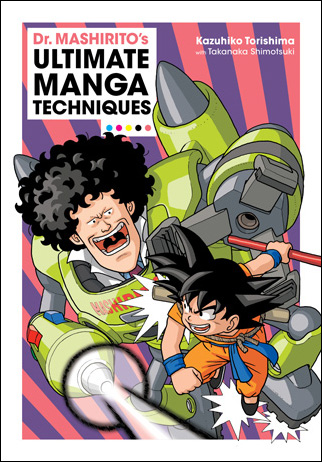
“You could also say that a long-form manga series can’t exist without an appealing protagonist due to its length, which is why for manga artists, as long as they create an appealing protagonist, all they need to do is think, ‘How will this protagonist act?’ and they will end up making the story. And if you maintain the appeal of that protagonist, then you’re likely to keep your series going forever based just on that alone. If you’re wondering, ‘Is that really even possible?’ then I’d like you to hear the following words from Akira Toriyama, who proved it true with Dragon Ball.
‘After a while, I stopped worrying about future story beats [of Dragon Ball] and I was drawing with wonder and excitement over what Goku would do.’
That’s right. At the time, the characters had started moving on their own in the manga artist’s mind—that is to say, they had decided on what they wanted (or didn’t want) to do as a split personality of Akira Toriyama’s. Of course, this was only possible because he was such a talented manga artist; a prospective manga artist couldn’t pull off something like that out of the blue. That’s why the first thing to do is follow the ‘protagonist > story’ formula and start creating your story by first coming up with an appealing protagonist. Pro manga artists and editors call that ‘defining a character,’ but it means making a character that stands out from the many other characters so much that you can tell who they are from afar. No matter how appealing the character may be, if that appeal doesn’t come across to readers, it’s ultimately pointless. Naturally, the most prominent character has to be the protagonist over any other character.”
—Kazuhiko Torishima (Dr. Mashirito’s Ultimate Manga Techniques, page 35)
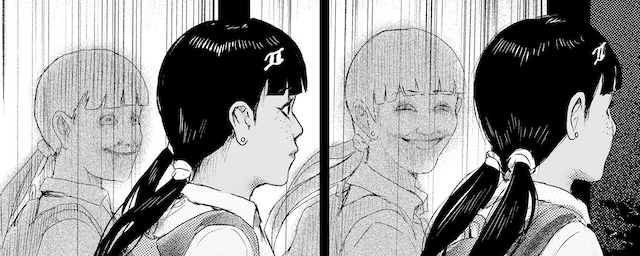
Brace yourself before reading Azam Raharjo’s “NIRMAYA”.
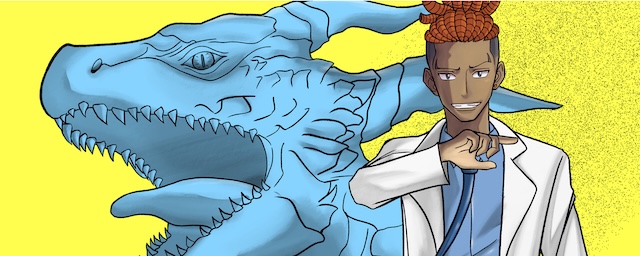
Discover the power of true strength in “Beast Clinic” by A.E.B!
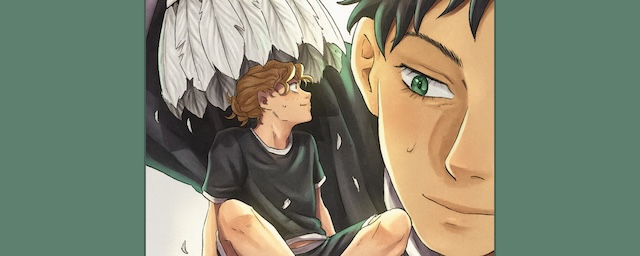
You’ve never read a sports manga like Kura Santo’s “Ace’s Ransom”.

Curryuku’s Not So Shoujo Love Story amps up the competition to a new level in volume 3!
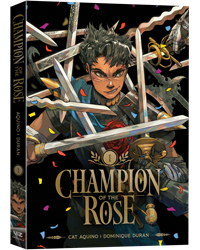
Cat Aquino and Dominique Duran bring the grit and glamour of the Sagrada Empire to life in Champion of the Rose.
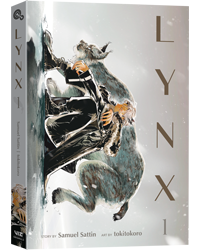
Beyond the end of the world, the angels have teeth… in Lynx , by Samuel Sattin and tokitokoro.
Sign up here to get the latest VIZ Originals Creator Newsletter straight to your email!

You’ll never miss a beat when you subscribe to our newsletter.
Already have a VIZ account? Log in.
Don't have an account? Sign up.
Enter the e-mail address associated with your account and we'll email you a link to reset your password.
