Skip to main content

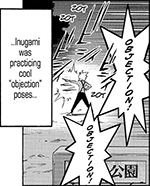 Welcome to the Nihongo Lesson feature. We strive to give you useful manga-based Japanese language tips and maybe even a glimpse into the translation process. This week’s lesson will once again focus on Shonen Jump’s newest Jump Start series, Gakkyu Hotei: School Judgment ! For this lesson we’ll look into some of the legal jargon used in the series.
IGI ARI (いぎあり)
This literally means “I have an objection” but is translated as simply “Objection!” This term might be a little useful in real life. Whenever I’m asked to do the dishes I like to throw out an IGI ARI! Does it work...? Of course not! But you can’t blame a guy for trying. Maybe I just need to work on some cool poses like Inugami.
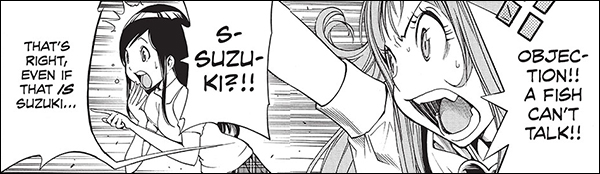
BENGOSHI (べんごし)
This is the Japanese word for “lawyer” or “attorney.” I’m not exactly sure how the legal process works in Japan, but I don’t think they have baby judges. Hopefully I never find out!
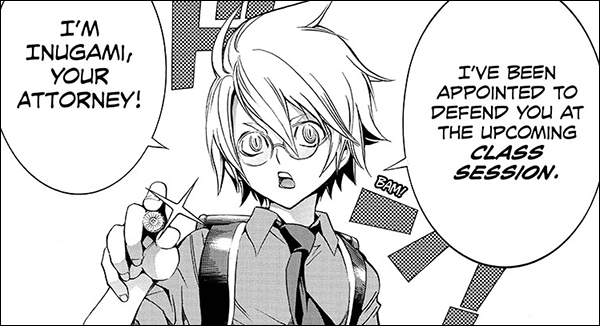
KENJI (けんじ)
And KENJI is the Japanese word for “prosecutor.” I would imagine that in the world of Gakkyu Hotei some students might misbehave just so they can be prosecuted by Pine-chan. That seems a bit risky though—that girl is tough!
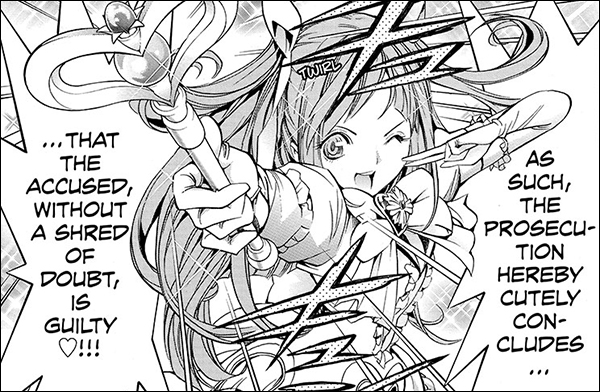
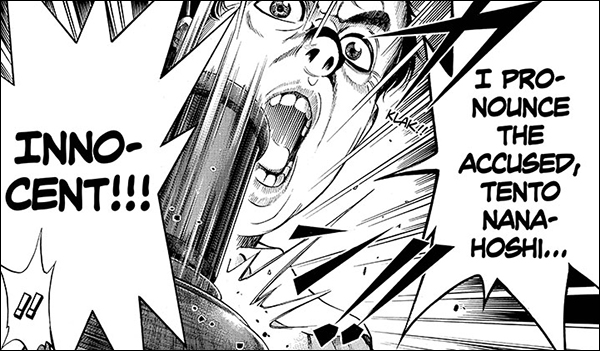
MUZAI (むざい)
This is “innocent,” though it literally means something like “lacking sin.” The word for guilty is “yuzai,” which means that you “have sin” or “have committed the crime.” Seemed pretty obvious that Tento was a good kid, and I’m glad Inugami was able to uncover the truth. I don’t think Tento would have survived very long at Onigashima school...
Get more tips by listening to our PODCAST!

You’ll never miss a beat when you subscribe to our newsletter.
Already have a VIZ account? Log in.
Don't have an account? Sign up.
Enter the e-mail address associated with your account and we'll email you a link to reset your password.
