Skip to main content

Welcome to the Nihongo Lesson feature. We strive to give you useful manga-based Japanese language tips and maybe even a glimpse into the translation process. This week we’re focusing on older sisters. If your name is Raku or you just happen to love manga, this is super valuable info you need to know! Okay, maybe not...
Big sisters are pretty common in manga, and this is how you can address them.
ONEECHAN (おねえちゃん)
Nisekoi does a good job of showing how ONEECHAN can be used for both actual older sisters and for girls who are older than you but not actually your sister. When Haru is introduced in Nisekoi, she is very protective of her older sister. She’ll do anything to shield her ONEECHAN from that panty-peeping Raku!
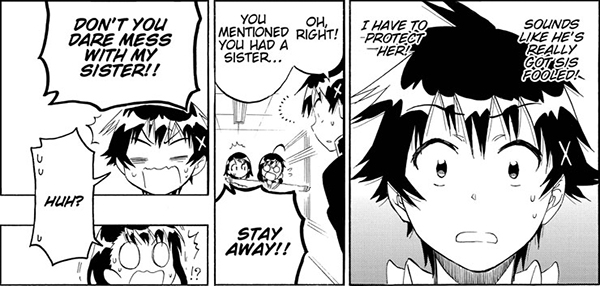
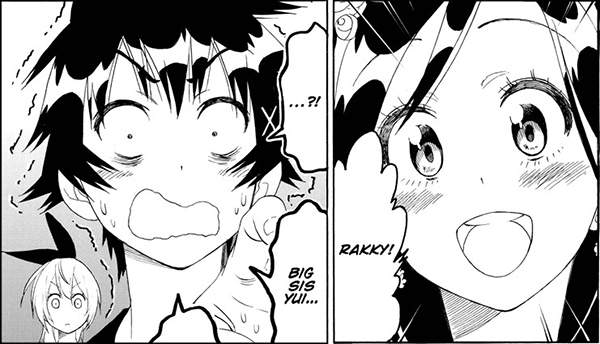
And in last week’s chapter, we were introduced to YUI-NEE, or big sis Yui. These relationships can be hard to translate into English as one wouldn’t usually call an older friend a “sister.” The editor struggled with this one, that’s for sure. "Rakky" for him, the situation is clearly explained within the text of the manga!
ONIICHAN (おにいちゃん)
Let’s not leave out the big brothers! ONIICHAN can be used in the same way. If Yui had been a boy, maybe he would have been YUI-NII. Frankly, Raku does need an older brother in his life to set him straight and clue him in on a few things... After all, wouldn’t it be wonderful to have a kind and thoughtful brother like Light from Death Note to help you with your studies? Who are your favorite anime/manga older brothers and sisters?

Get more tips by listening to the SJ PODCAST!
You’ll never miss a beat when you subscribe to our newsletter.
Already have a VIZ account? Log in.
Don't have an account? Sign up.
Enter the e-mail address associated with your account and we'll email you a link to reset your password.
