Skip to main content
 What if tomorrow never came? What if you were cursed to relive the same day for the rest of your life, and that day just so happens to be the day you suffer a gruesome death? What sounds like a painful ordeal is everyday life for Keiji Kiriya, the hapless hero of Hiroshi Sakurazaka’s All You Need Is Kill, the sci-fi novel that spawned a graphic novel, manga and movie adaptation.
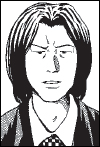
Our friends at NEO Magazine recently had the chance to have a few questions answered by Kouji Yoshida, the Japanese manga editor of the series. Kouji Yoshida is the managing editor of Weekly Young Jump and has been the editor for a variety of manga series including Death Note.
 NEO Magazine (NEO): How/why was it decided to transform the novel into a manga?
Kouji Yoshida (KY): It started with a request from the Super Dash Bunko editorial department, the publisher of the novel in Japan. With a movie starring Tom Cruise coming, they really wanted us to create a manga adaptation. From there, I read the novel and really liked it. I believed that because the characters were so strong, the story would be perfect for an adaptation.
NEO: What challenges did you anticipate the adaptation would bring?
KY: We usually try to keep a manga adaptation as similar to the novel as possible, but in my mind that doesn’t always lead to an interesting manga. So my biggest concern was simply to make a great manga. I believe that novels and manga each have their own strengths, and to enhance a manga you shouldn’t fear changing around some things, from the original novel.
NEO: What did you have to change to adapt this to a manga?
KY:In order to create an entertaining manga, we altered a few things such as making the story easier to understand and adjusting the tempo. But the hardest aspect was that in some instances, we couldn’t use the great dialogue from the novel as is. Many of the best lines were natural continuations from the narrative, and since we rarely use the narrative text, the catchy lines would just feel like they were coming out of thin air. We had many lines that made us sad to have to remove.
NEO: You used to edit manga in Weekly Shonen Jump, what differences are there when editing manga for Weekly Young Jump, the magazine that ran All You Need Is Kill in Japan?
KY: Basically there are almost no changes to how I work. I’m just trying to make sure the manga is something that I will enjoy and also something that the readers will enjoy. That’s what I always focused on at Weekly Young Jump, and it’s the same now at Young Jump. However, it is true that with Young Jump being a seinen magazine aimed at an older audience, I can get away with a lot more. It feels like I have much more leeway.
 NEO: What is the market like for this type of sci-fi manga in Japan? Overseas, titles like Akira and Ghost in the Shell are always popular, but how is sci-fi for the seinen audience received?
KY: There aren’t that many Japanese science fiction titles, but with series like the recently concluded Gantz and the current Terra Formars, I do believe that there is always a chance for a really popular one.
NEO: Was Mr. Sakurazaka involved in the adaptation process at all? Have you had any feedback from Mr. Sakurazaka about the manga?
KY: He basically let us do what we wanted with the manga version. He reviewed the storyboards for each chapter, and he did correct us once on an error in the explanations of the loops. That was a great help. Also, the novel about green tea that appears in the manga and the info on Keiji’s and Rita’s dog tags were provided by Sakurazaka Sensei.
NEO: Please describe the concept in a few sentences.
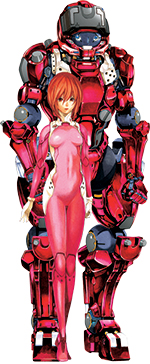
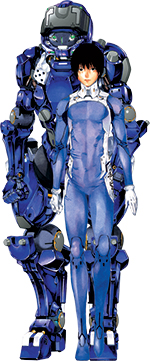
KY: Boy meets girl on the ultimate battlefield. Most people focus on the time loops, the battle scenes or the science fiction elements, but to me this is a story about two young people, Keiji and Rita. I believe the core of the story is just how much people can care about each other under extreme conditions on the battlefield.
NEO: How did you tackle the challenge of portraying the complex scientific concepts in the form of manga?
KY: I personally focused on expressing the emotions of Keiji and Rita. If we wanted to get in-depth with the scientific concepts from the novel, so much explanation would be needed that it would affect the enjoyment of the manga. So instead of focusing on that, I went with the character’s emotions. I figured the best way to express the science was to show it through the art. I’m hoping that the readers can pick up the basic concepts intuitively through the art depicted on the pages.
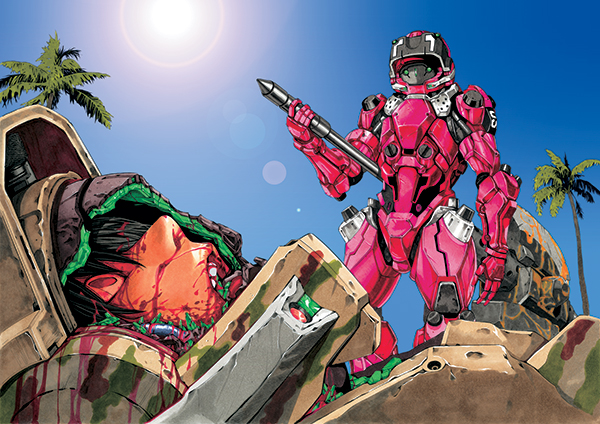
Interview originally conducted by NEO Magazine (www.neomag.co.uk) and appeared in the 06-23-2014 issue of Weekly Shonen Jump. To pick up a copy of the All You Need is Kill manga, click here!
You’ll never miss a beat when you subscribe to our newsletter.
Already have a VIZ account? Log in.
Don't have an account? Sign up.
Enter the e-mail address associated with your account and we'll email you a link to reset your password.
